


Powerflush
Powerflush and central heating system cleaning in Leeds.
Cold radiators, noisy pipes, and sluggish heating are common signs of sludge build-up in your central heating system. MattPlumb provides professional powerflush services across Leeds, Bradford and surrounding areas, restoring circulation and protecting your boiler long term.
What we offer
Signs your system may need a powerflush
Powerflushing targets the root causes of poor heating performance rather than masking the symptoms.
Noisy boiler or gurgling pipes
Slow or uneven heating
Sludge and rust build-up
Reduced boiler efficiency
Radiators needing frequent bleeding
Why choose us
Professional powerflush, carried out properly
Powerflush work is carried out professionally with a full system assessment beforehand, inhibitor added on completion, and clear advice on keeping the system clean long term.
- Gas Safe registered – No. 599418
- Full system assessment before starting
- Inhibitor added on completion
- Magnetic filter advice included
- Honest, clear pricing
- Local service across Leeds and Bradford
Our approach
We only recommend a powerflush when it is the right solution.
A powerflush done properly includes a system assessment, the flush itself, inhibitor protection on completion, and clear advice on maintaining performance. We do not recommend a powerflush unless the system actually needs one.
ThoroughHonest adviceProfessionalLocal
FAQs
Common questions about powerflushing
Answers to the questions we hear most often from homeowners across Leeds and Bradford.
What is a powerflush and how does it work?
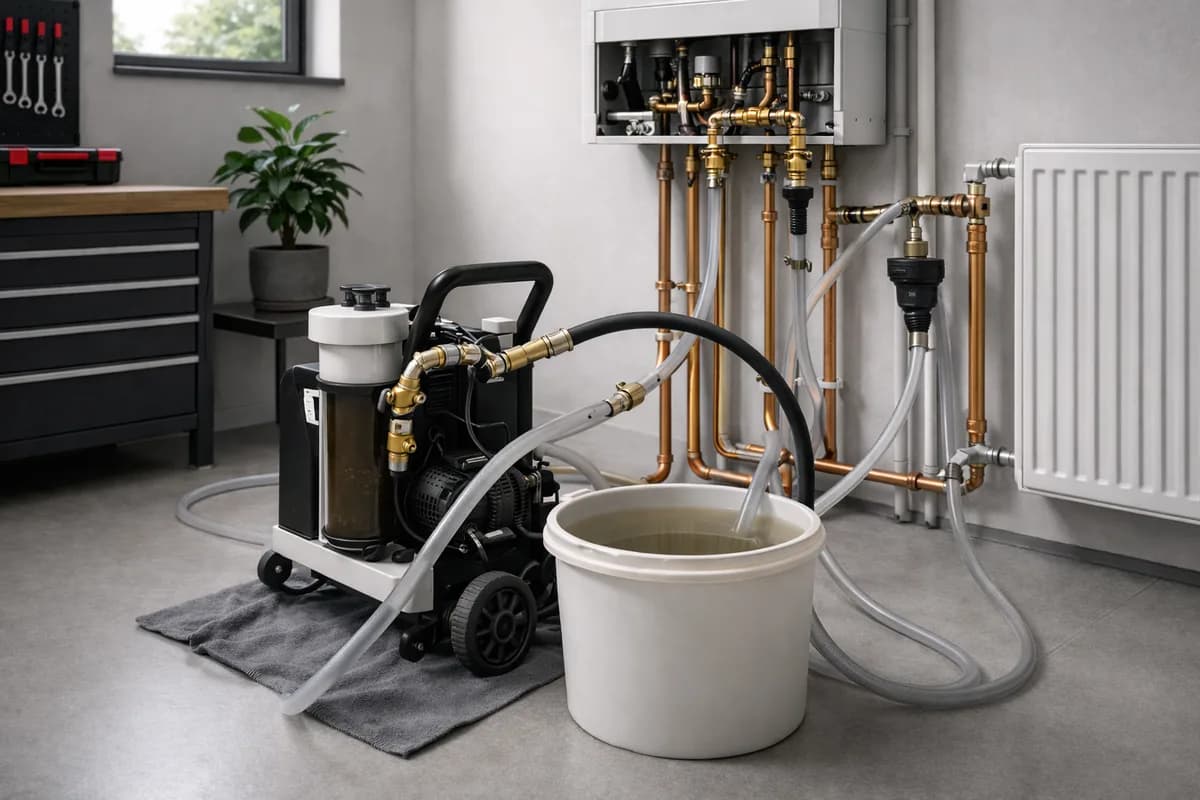
A powerflush is a deep-clean of your central heating system. A specialist pump is connected to your system and circulates water mixed with cleaning chemicals at high velocity through your radiators and pipework. This dislodges and removes the sludge, rust and debris that builds up over time. Once the system is clean, an inhibitor is added to protect against future corrosion.
What are the signs my heating system needs a powerflush?
The most common warning signs are cold spots at the bottom of radiators while the top stays hot, black or brown water when you bleed a radiator, radiators that need bleeding frequently, banging or gurgling noises from the boiler or pipes, and a system that takes a long time to warm up. If you notice any of these, it is worth having the system assessed before the problem gets worse.
How long does a powerflush take?
Most homes take between 4 and 8 hours. A typical 3-bedroom house with 6 to 8 radiators usually takes around a full day. Larger properties or heavily contaminated systems may take longer. We will give you a realistic time estimate when we assess the system beforehand.
Can a powerflush damage my boiler or pipes?
When carried out correctly, a powerflush should not damage a sound system. The process uses high flow at low pressure — around 2 bar — which is safe for pipework in good condition. In some cases the process can reveal pre-existing corrosion that would have caused problems regardless. We always assess the system before starting to flag any concerns.
Does my new boiler need a powerflush?
Most modern boiler manufacturers recommend or require a system flush when a new boiler is installed. Fitting a new boiler into a dirty, sludge-filled system reduces its efficiency and can shorten its lifespan significantly. Some manufacturers specify a flush as a condition of the warranty. We always advise on this as part of any boiler installation.
Will the sludge come back after a powerflush?
Not if the system is properly maintained. After flushing, we add a corrosion inhibitor which slows the formation of new sludge. We also recommend fitting a magnetic filter to catch any particles before they circulate. The inhibitor level should be checked annually — usually as part of a boiler service — to keep the system protected long term.
Next step
Think your system needs attention?
If your heating feels sluggish, uneven, or noisy across Leeds, Bradford or a nearby area, get in touch and we can help you decide whether a powerflush is the right next step.